


SPF 50+ Sun Protection Gel
INVISIBLE GEL - UVA / UVB / REDUCES DARK SPOTS / FOUNDATION
INVISIBLE GEL - UVA / UVB / REDUCES DARK SPOTS / FOUNDATION

SPF 50+ Sun Protection Gel - $57.00 USD
Check that you're not missing anything in the PERS 4-step skincare protocol to restore your skin's natural, virtuous cycle.
Take a generous dab of Protection SPF50 PA++++ en Gelée and warm it between your hands.
1.
Start by breathing in the product to prepare your senses for application.
2.
Apply the gel gently smoothing over your chin and the oval of your face with upward strokes. Continue from cheeks to ears.
3.
Continue, alternating hands to smooth the cream over the forehead, then back down to the lymph node chain.
4.
Finish with the oval of the face, neck and décolleté, using gentle, upward strokes.
5.
Make sure you cover all areas of your face, neck and décolleté for maximum protection.

85%
the signs of aging are less visible
82.5%
brown spots are less visible
97.5%
skin feels better protected
95%
the skin is more supple
* Clinically proven results over 2 months of testing, a panel of 40 volunteers, male/female parity - multi-ethnic.
Find out more
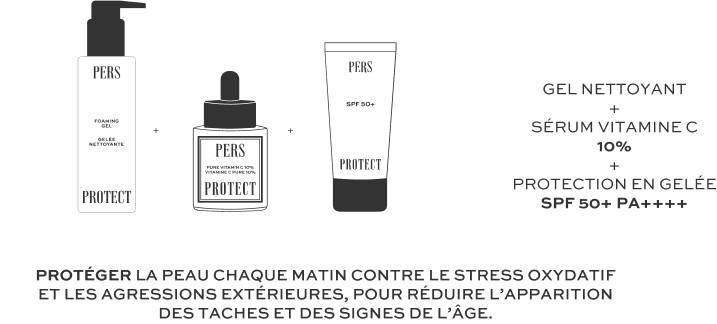
Morning
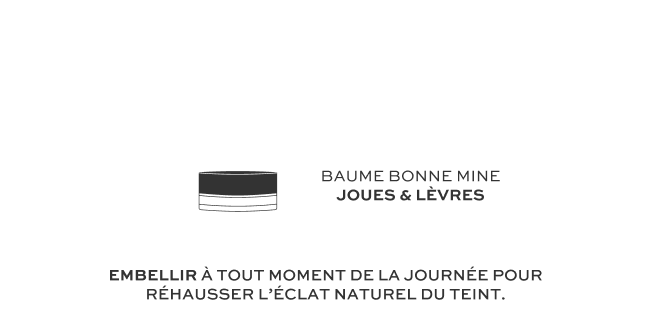
24/7
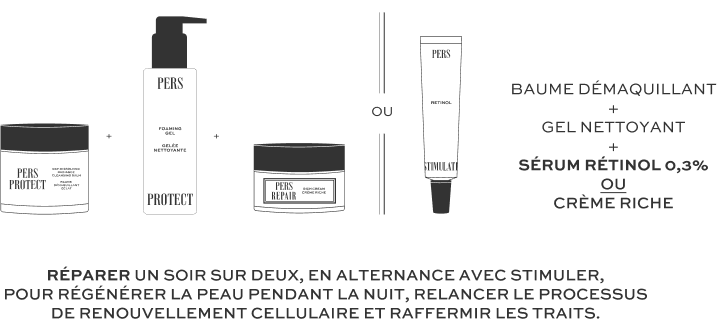
Evening
What dosage do you need?
Do the diagnostic
Overall rating: 4.5617976 / 5 from 89 reviews.
Protection SPF 50+ en Gelée offers excellent sun protection with a pleasant gel texture that is invisible and non-comedogenic. Customers appreciate its high UVA and UVB protection, as well as its ability to reduce signs of aging and hyperpigmentation. The scent is also highly praised.
Review topics: [].
"Impossible à utiliser, odeur très désagréable et très forte. Pas de protection sur le tube indiquant qu’il n’a jamais été ouvert. Pas de réponse à mon mail de réclama. Très déçue"
"Peluche à foison ! Passe ton chemin ! Argent jeté par les fenêtres ! À FUIR !!!!!"
"J’ai acheté ce produit après l’avoir testé auprès d’une amie. J’adore la texture gelée ! (c’est la première fois que je vois ça) Le produit est facile à appliquer, il pénètre vite et laisse la peau satinée. Une révolution pour moi qui rechigne toujours a mettre une protection solaire le matin !"
"Belle texture et bonne senteur"
"j'ai eu la surprise d'avoir deux tubes dont le gel présentait des grains. très désagréable et perte de temps pour l'application. sinon c'est un produit idéal pour se protéger sans effet gras et avec des senteurs très agréables"
"Gelée devenue un incontournable dans ma routine skincare du matin. Texture unique pour un rendu extraordinaire! Elle matifie, lisse et protège ma peau. Aucune trace, aucun effet collant. Je recommande à toutes celles qui ont une peau mature."
"Efficace mais tend à peler quelle que soit la quantité"
"Je suis très mitigé concernant la protection SPF 50 en gelée, elle a un gros défaut, quand je la mets par-dessus ma crème hydratante elle peluche, ce n’est pas très agréable. ."
"on dirait une caresse su la peau"
"Excellente protection solaire! La texture est incroyable et le parfum trop agréable ! Je l’applique au quotidien… sous mon maquillage."
Applying sun protection, also known as SPF or anti-UV protection, in the morning helps to PROTECT the skin from the harmful effects of UV: sunburn, the result of UVB rays, but also and above all UVA rays, which are responsible for premature aging of the skin and, in the long term, potentially for the risk of skin diseases such as skin cancer.
Applying sun protection on a daily basis helps prevent the appearance of spots and uneven skin tone caused by UV rays. The result is a brighter, more even complexion and, above all, the prevention of premature ageing.
For Dr. Antoni Calmon, sun protection is the most effective anti-aging measure available. He designed this product for the PROTECT stage of the PERS protocol, because UVA rays, which are responsible for skin ageing, are present all year round, not just in summer.
An application 2 to 3 times a day is recommended all year round. In the event of direct exposure to the sun, reapplication every two hours is recommended.
Apply UV protection once or twice a day when the UV index is 3 or lower.
For a UV index above 3, apply protection at least twice a day, even if you're in an enclosed environment with no direct exposure, including through a window.
For direct exposure to the sun, apply protection every two hours, even through a window or in the car. Don't forget to apply UV protection before any exposure, even for a short time during the day.
You can find UV indices in the weather applications on your smartphone.
The "+" stands for UVA Protection, a measure against UVA rays mainly used in Asia. The PA classifies protection levels into four categories: PA+, PA++, PA+++, and PA++++. For everyday use, PA+ provides very good protection. On the other hand, for skin that is extremely sensitive to the sun, regularly exposed to the sun, or has a family history of skin cancer, PA+++ or PA++++ are recommended.
PA stands for "Protection Grade of UVA", i.e. the level of protection against UVA rays. PA+ ratings measure a product's ability to block UVA rays.
Developed in Japan, the PA rating system is based on the PPD (Persistent Pigment Darkening) method. This test relies on exposure to UVA rays to induce persistent tanning of the skin, making it possible to assess how long it takes before the skin tans.
In theory, a sunscreen with a PPD value of 10 would enable a person to withstand 10 times more UVA exposure before tanning. However, PPD values cannot be measured with perfect accuracy. As there is no standardized system for assessing PPD scores, different rating systems are used in different countries to indicate the strength of UVA protection. PPD therefore does not give an exact amount of UVA protection, but is converted according to the rating system in force in each country or region.
Only some countries use UVA tests, notably Japan, the UK, Germany, the USA and Australia. In Japan, PPD results are grouped and simplified in the form of PA labels.
The equivalences are as follows:
It's important to note that not all countries use the same rating system, as PPD is not standardized internationally.
In a nutshell, PA+ means you have some UVA protection, and the more "+" there are, the higher the protection. Currently, the highest level of UVA protection available is PA++++.
Yes, you can apply your sun protection after your moisturizer.
To properly PROTECT your skin, we recommend applying your Vitamin C Serum, followed by your cream if you feel the need, and finishing with your daily SPF50+ protection.
Sun protection and day cream have different needs.
We recommend that you apply your sun protection daily with as high a factor as possible, such as broad-spectrum SPF50+.
PERS SPF50+ protection has been tested non-comedogenic, making it perfectly suited to oily skin. It also helps control sebum production and the risk of acne.
Your skin diagnosis

Magali Calmon
Co-founder of PERS and skin expert


